When planning a new kitchen, one of the first decisions is whether to choose a built-in kitchen or a modular kitchen.
The answer depends on what matters most to you. A built-in kitchen can make better use of unusual spaces and gives you more control over cabinet sizes and the overall design. A modular kitchen can be a practical option when you want pre-made units, a simpler installation process, and easier replacement of individual sections.
So which one is better?
Built-in is usually better for homeowners who want a kitchen designed around the exact room. Modular is often better for people who prefer a more standardised and flexible setup.
The best choice depends on your kitchen size, layout, budget, storage needs, design preferences, and plans for the property.


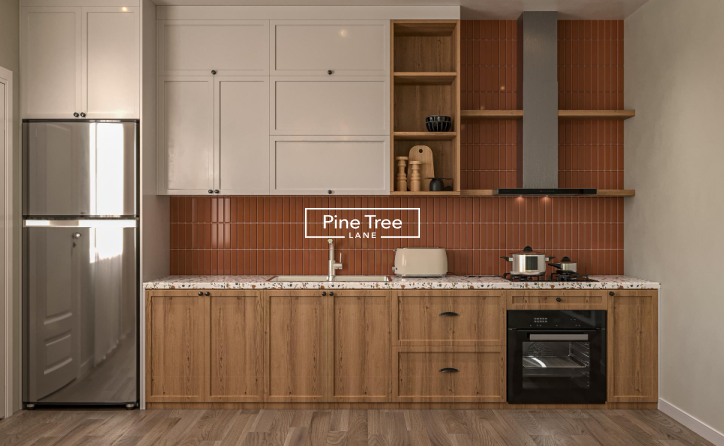
A built-in kitchen is designed as a fixed part of the room.
The cabinets are planned around the actual dimensions of the kitchen, including walls, corners, windows, doors, appliances, plumbing points, and available ceiling height.
This approach can be particularly useful when the room has areas that are difficult to fill with standard cabinet sizes.
For example, a kitchen may have:
A built-in design can account for these details rather than working around standard cabinet modules.

A modular kitchen is made from separate cabinet units that are manufactured before being installed in the home.
Instead of constructing every cabinet around the room on site, the kitchen is assembled from prepared modules.
These can include:
The modular approach can simplify installation because much of the cabinet work is completed before the units reach the property.
It is particularly useful when the kitchen has a straightforward layout and standard cabinet sizes fit the available space.
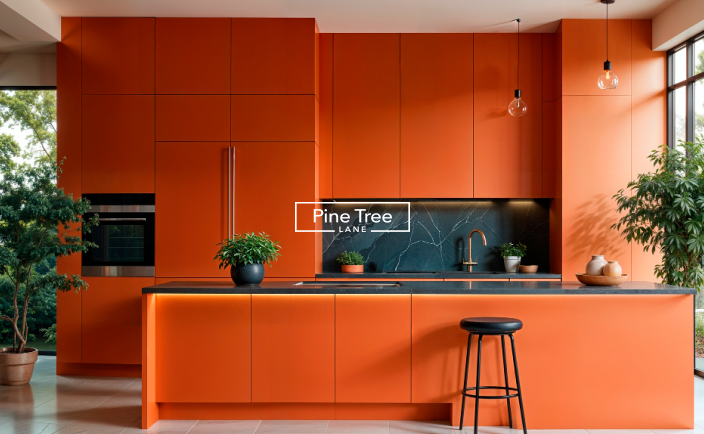
The biggest difference is how the kitchen is planned and fitted into the room.
| Feature | Built-In Kitchen | Modular Kitchen |
|---|---|---|
| Cabinet design | Planned around the room | Based on separate units |
| Space use | Very high | High |
| Custom dimensions | Excellent | More limited |
| Installation | More project-specific | Usually more straightforward |
| Future replacement | Can require matching existing design | Individual units can be replaced |
| Unusual spaces | Very suitable | Can be more difficult |
| Design freedom | Very high | High |
| Appearance | Continuous and integrated | Structured and modular |
| Best suited for | Permanent, room-specific designs | Flexible and standardised setups |
Neither option is automatically superior.
The important question is which approach suits your room and the way you use your kitchen.
This is one area where built-in kitchens often have an advantage.
Because the cabinets can be planned around the actual room, the designer can use spaces that may otherwise remain unused.
This could include the area:
Imagine a wall that is 3.86 metres wide.
A set of standard cabinets might leave a small gap at one end. With built-in cabinetry, that remaining space can potentially become part of the design.
A modular kitchen can still use space efficiently, but standard module sizes can make unusual dimensions harder to handle.
For homeowners comparing different arrangements, these kitchen layout ideas can also help show how cabinet placement affects storage and movement.
A modular kitchen can have an advantage when installation speed matters.
Many of the cabinet units are manufactured beforehand, so the installation team can focus on positioning, assembly, fixing, and connecting the units.
A straightforward modular kitchen installation often takes around 2 to 4 weeks once the units arrive on site, while built-in cabinetry — which involves more on-site measuring, cutting, and fitting — can take roughly 4 to 8 weeks or more (estimate — verify against your contractor’s schedule).
A built-in kitchen can involve more site-specific work because the cabinets are closely matched to the room.
However, do not compare installation time without looking at the full project.
If the renovation also includes:
the complete timeline can be much longer than the cabinet fitting itself.
Ask for a project schedule that covers the entire renovation.
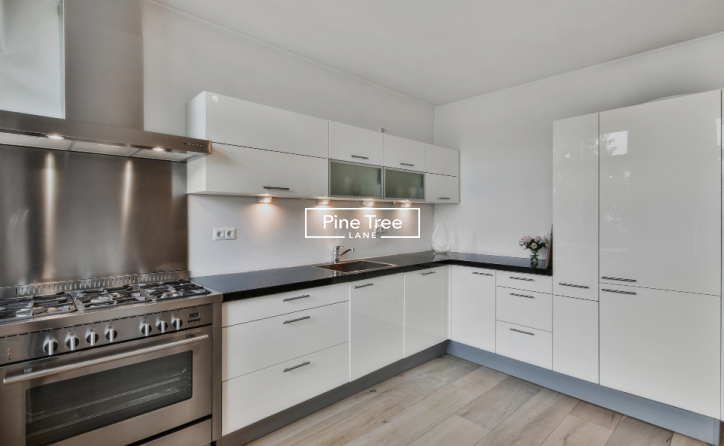
Built-in kitchens generally provide greater freedom when you want specific dimensions or a highly integrated appearance.
You can decide the:
Modular kitchens also offer many choices in colours, finishes, handles, and cabinet configurations.
The difference is that a built-in system can be designed around the exact room, while a modular system works within the sizes of the available cabinet units.
Storage is one of the biggest reasons people renovate a kitchen.
Ask yourself what you actually need to store.
For example:
A family kitchen may need: Large pots, pans, groceries, tableware, small appliances, and serving dishes.
A smaller apartment kitchen may need: Better use of vertical space, compact storage, and easy access to everyday items.
Built-in cabinetry can make it easier to create storage around the exact room.
For example, a designer may be able to include a tall pantry between two existing walls or add a cabinet above a refrigerator.
Modular kitchens can also offer excellent storage through standard pull-outs, drawers, pantry units, and corner solutions.
The better choice is not the one with the most cabinets.
It is the one that gives you useful storage where you actually need it.
Dubai properties come in many shapes and sizes, so the right choice can change from one home to another.
Built-in kitchens can work particularly well in villas where homeowners want the cabinetry to become part of the wider interior design.
Large spaces can accommodate:
A modular kitchen may work well when the kitchen has a straightforward shape and the available cabinet sizes fit the room.
A built-in kitchen can be useful when space is tight and the homeowner wants to make use of every available section.
In both cases, the room’s dimensions should come before the choice of system.
How long you plan to stay in the property is often the deciding factor, whether you’re in a villa or an apartment. Homeowners settling in for many years, with unusual dimensions and very specific storage needs, tend to lean built-in, while those who expect to change parts of the kitchen later or who have a standard-sized space often prefer modular units. Whichever system you choose, the quality of construction, hardware, and installation matters more than the built-in-versus-modular label; a well-made kitchen of either type can serve you well for decades.

Both types need routine maintenance.
Cabinet surfaces should be cleaned, hardware should be checked, and plumbing areas should be inspected for leaks or moisture.
As a general guideline, wipe down cabinet fronts and handles weekly, deep-clean interiors and check for spills or moisture every 3 to 6 months, and have hinges, drawer runners, and door alignment inspected roughly once a year (estimate — verify with your installer’s care instructions).
Lifespan also differs by system. Built-in cabinetry made from solid wood or high-grade materials typically lasts around 25 to 40 years with proper care, while modular or stock cabinets, often built from MDF or particleboard, typically last around 10 to 20 years before components need replacing
The difference often becomes more noticeable when something needs to be replaced.
With a modular system, an individual cabinet unit can often be removed without changing the entire kitchen.
With a built-in kitchen, a replacement may need to match the original dimensions, finish, hardware, and surrounding cabinets.
Soft-close hinges and drawer runners, available on both built-in and modular systems, can also reduce day-to-day cabinet noise — it’s worth asking for these on either type of quote.
This does not make built-in kitchens harder to maintain. It simply means future repairs and replacements should be considered when the kitchen is first designed.
There is no fixed price for either option.
The final cost can change based on:
As a general Dubai benchmark, stock modular cabinetry typically runs around AED 800–1,800 per linear metre, semi-custom units around AED 1,500–3,000 per linear metre, and fully custom built-in cabinetry around AED 2,500–6,000+ per linear metre (estimate — figures vary by contractor, material, and finish).
A full kitchen renovation in Dubai covering demolition, cabinetry, countertops, appliances, plumbing, and electrical work most commonly falls between AED 35,000 and AED 145,000, with luxury or large villa projects sometimes exceeding AED 180,000
A built-in kitchen may cost more when many custom dimensions and site-specific details are involved.
A modular kitchen may have a more predictable starting cost because it uses defined cabinet units.
But never compare only the final number.
Check exactly what each quotation includes.
Use these five questions to narrow down the choice:
1. Does my kitchen have unusual dimensions?
If yes, a built-in design may make better use of the space.
2. Do I need highly specific storage?
If yes, built-in cabinetry gives you more freedom to place storage exactly where it is needed.
3. Is installation speed a major priority?
If yes, a modular system may be worth considering.
4. Do I want a permanent kitchen?
If yes, a built-in solution may suit your long-term plans.
5. Could I change individual sections later?
If yes, modular units may offer more flexibility.
| Your Main Priority | Better Fit |
|---|---|
| Unusual room dimensions | Built-In |
| Maximum use of available space | Built-In |
| Specific cabinet dimensions | Built-In |
| Faster cabinet installation | Modular |
| Easier replacement of individual units | Modular |
| Standard-size kitchen | Modular |
| Permanent home | Built-In |
| Flexible future changes | Modular |
| Fully integrated appearance | Built-In |
There is also no rule saying the entire kitchen has to follow one approach.
Some projects can combine fixed cabinetry with standardised units where that makes sense.
The important thing is to choose the system based on the room, lifestyle, budget, and future plans.
The built-in vs modular decision becomes much easier when someone looks at the actual room rather than recommending one solution for every project.
Pine Tree Lane works with homeowners in Dubai on kitchen planning, cabinetry, storage, finishes, and renovation projects.
You can explore kitchen design services in Dubai to learn more about the company’s kitchen solutions.
So, built-in kitchen vs modular kitchen—which is better?
A built-in kitchen is usually the better choice when you want to use the room’s exact dimensions, create specific storage, and achieve a more integrated appearance.
A modular kitchen can be the better choice when you want pre-made cabinet units, a simpler installation process, and easier replacement of individual sections.
For many homeowners, the decision comes down to one question:
Do you want the kitchen designed around the room, or do you want the room fitted with ready-made kitchen modules?
Once you answer that, choosing between the two becomes much easier.
For a Dubai home, the best kitchen is not necessarily the most expensive or the most fashionable. It is the one that makes good use of the available space and works for your everyday life.
Contact Pine Tree Lane today to discuss your kitchen design and find the right approach for your home.
A built-in kitchen can be better when you need custom dimensions, maximum use of space, or a permanent integrated design. A modular kitchen can be better when installation speed and easier future changes are more important.
A built-in kitchen can work especially well in small or unusually shaped rooms because the cabinetry can be designed around the available space. A modular kitchen can also work well when the room has standard dimensions.
Not always. The final cost depends on cabinet materials, finishes, hardware, countertop, appliances, storage accessories, design, and installation. Compare complete quotations rather than just the starting price. But a full renovation of either type commonly lands somewhere between AED 35,000 and AED 145,000 depending on scope
Yes. Some kitchens can combine fixed cabinetry with standardised cabinet units, depending on the room and the design.
As a general estimate, well-built built-in cabinetry often lasts around 25 to 40 years, while modular or stock cabinetry often lasts around 10 to 20 years before major components need replacing. The lifespan of a kitchen depends more on cabinet construction, materials, hardware, installation, and maintenance than simply whether it is built-in or modular.


