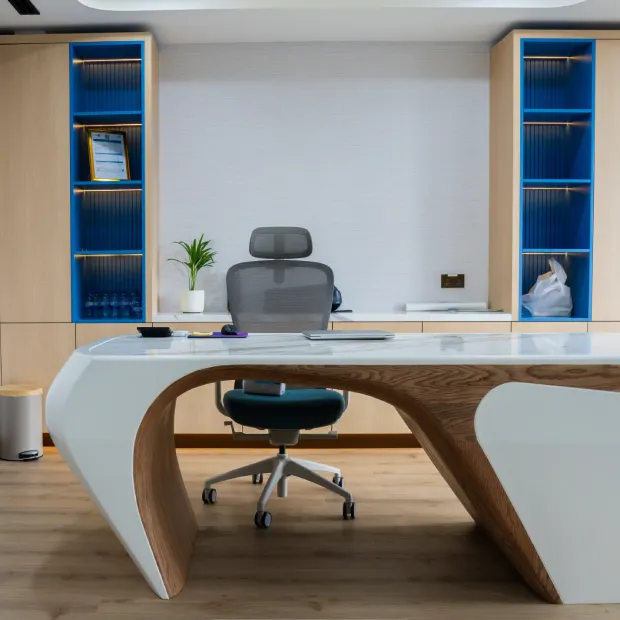
An office fit-out in the Dubai International Financial Centre, where the joinery does the dividing — timber slatted screens in place of solid partitions, a sculpted reception counter, a stone boardroom table and blue storage joinery running through the working areas.
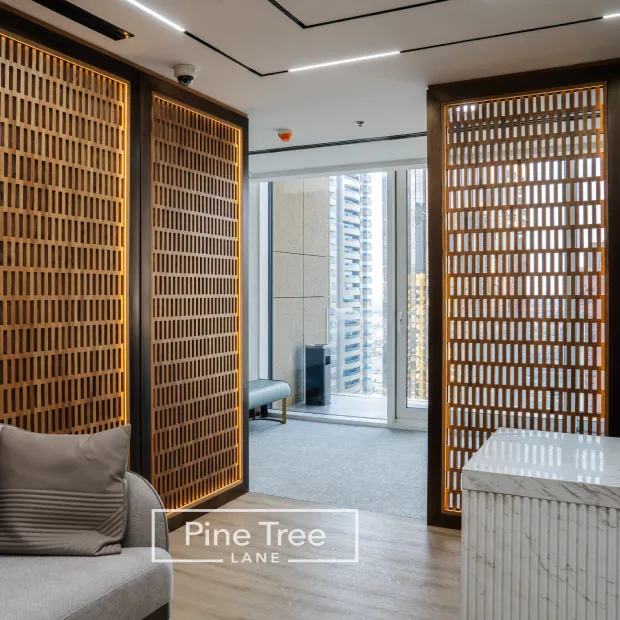
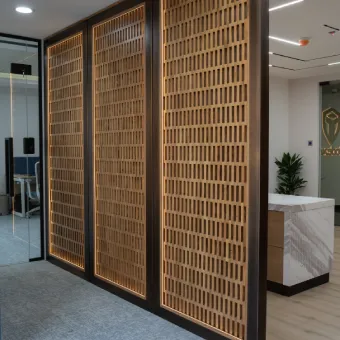
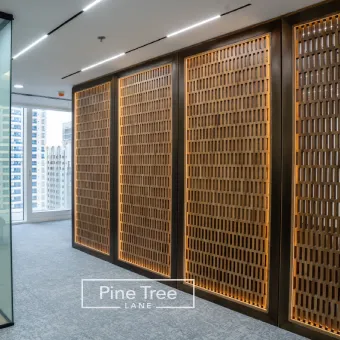
Solid partitions would have closed off the window line and left the inner desks without daylight. Running the divisions as timber slats keeps the separation but lets light pass between the battens, so the floor plate still reads as one space.
The same slat profile repeats at the lounge seating, behind reception and along the corridors, which is what ties a floor of separate rooms together. Where privacy was needed the slats sit against glass rather than replacing it.
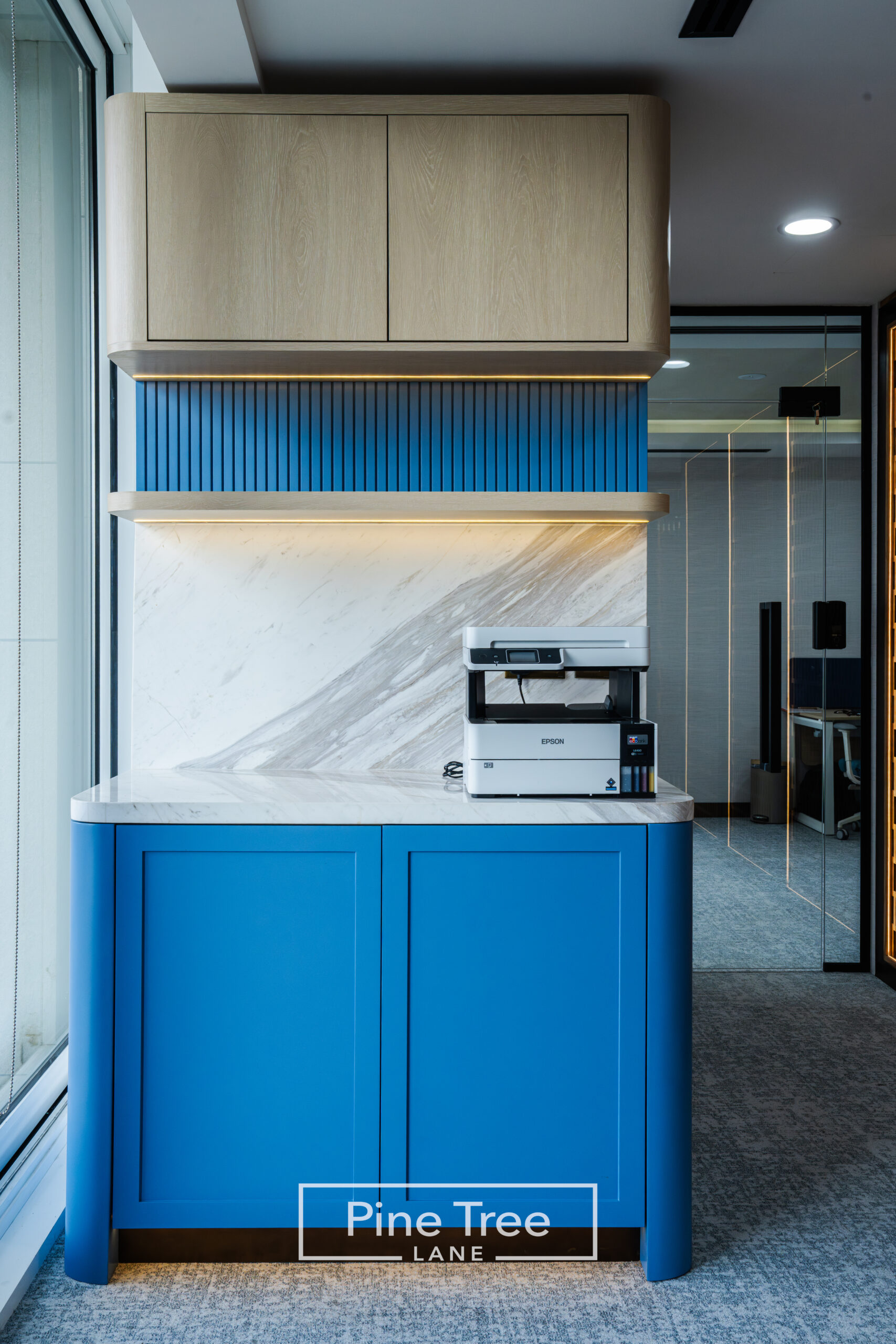
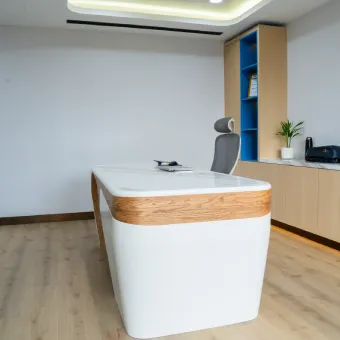
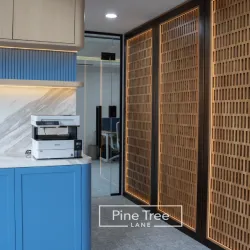
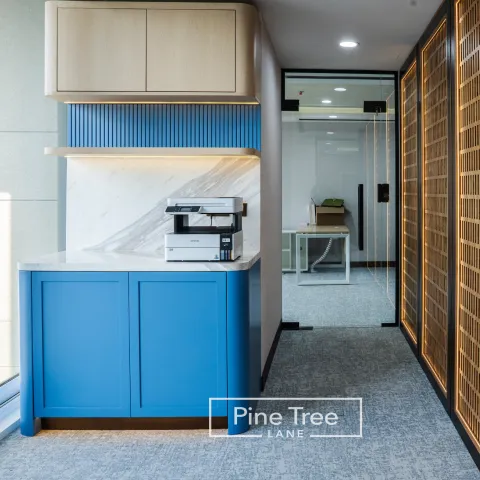
An office printer is the thing that ruins a clean fit-out — it arrives on castors and ends up in a corridor. Here it was housed inside the joinery with a worktop above it, so the machine is accessible without standing in the room. The base units were run in blue against cream uppers, which gives the working areas their own identity away from the reception and boardroom. Keeping the worktop level with the slat line means the cabinetry reads as part of the partition rather than furniture pushed against it.
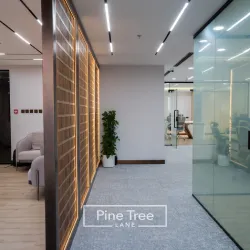
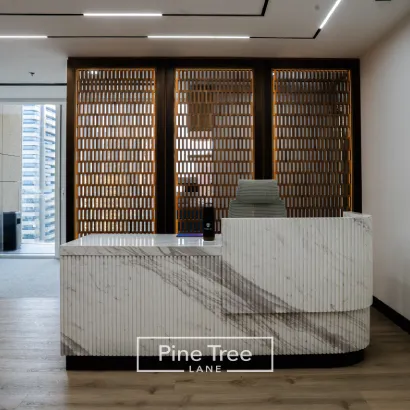
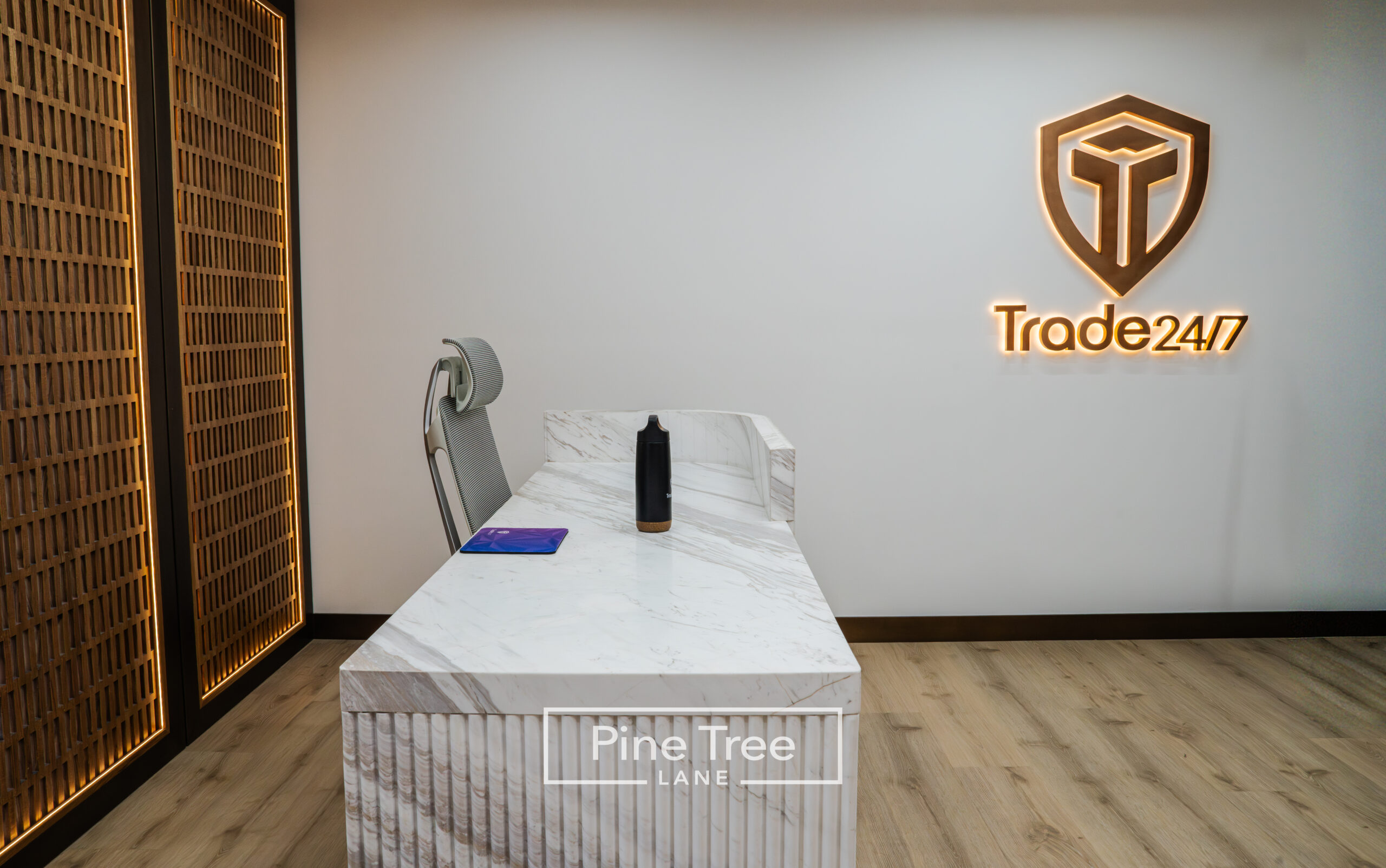
The reception counter was built as a single curved form with a stone top, so there is no visible joint across the front. Setting it against the slat wall means the first thing a visitor sees is the material that runs through the rest of the floor.
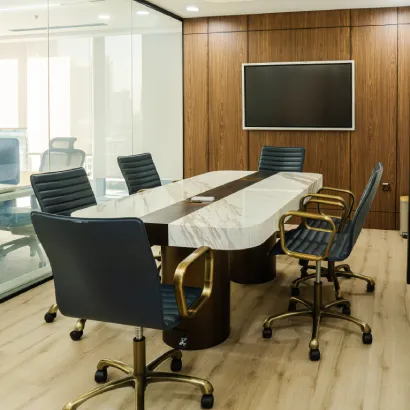
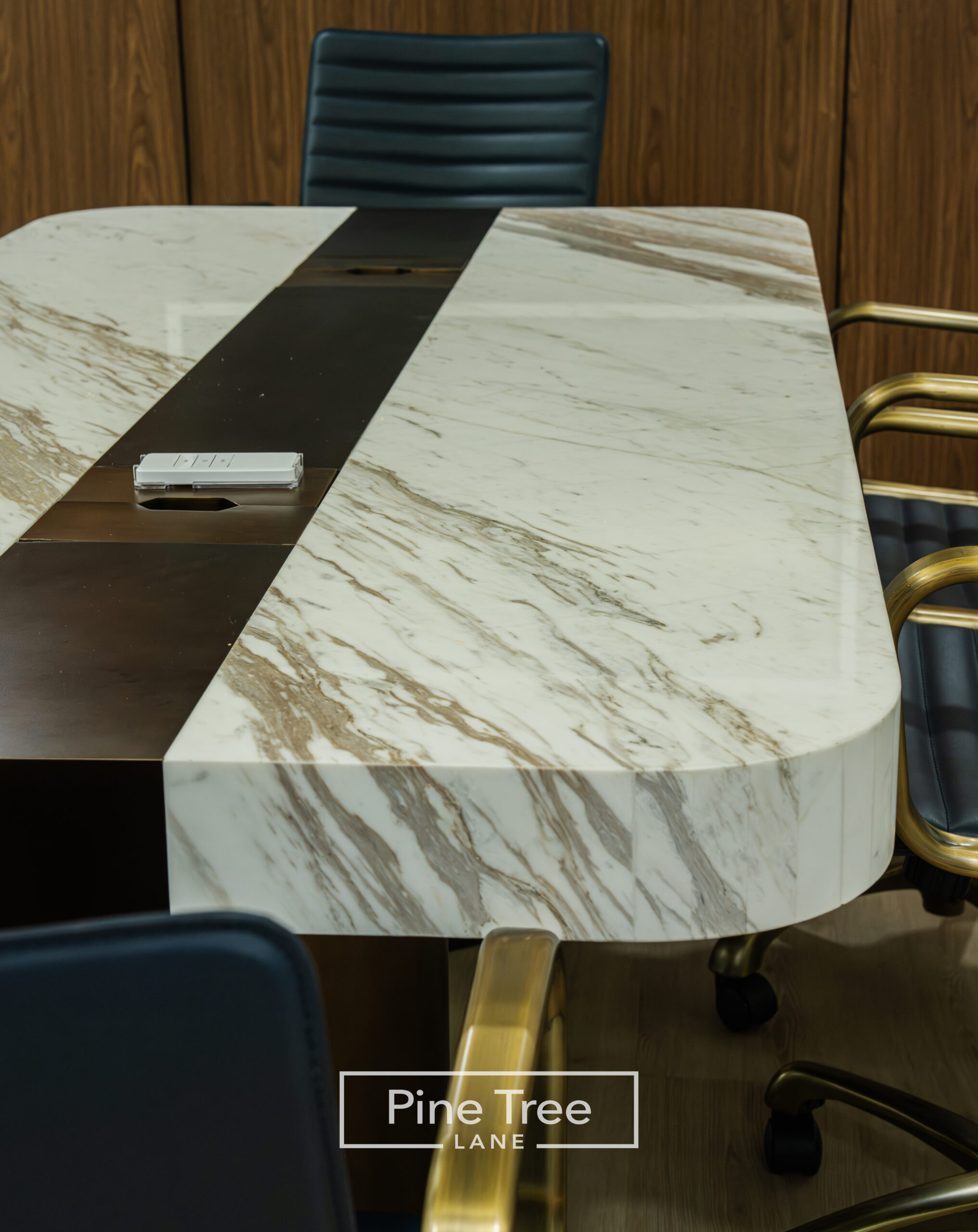
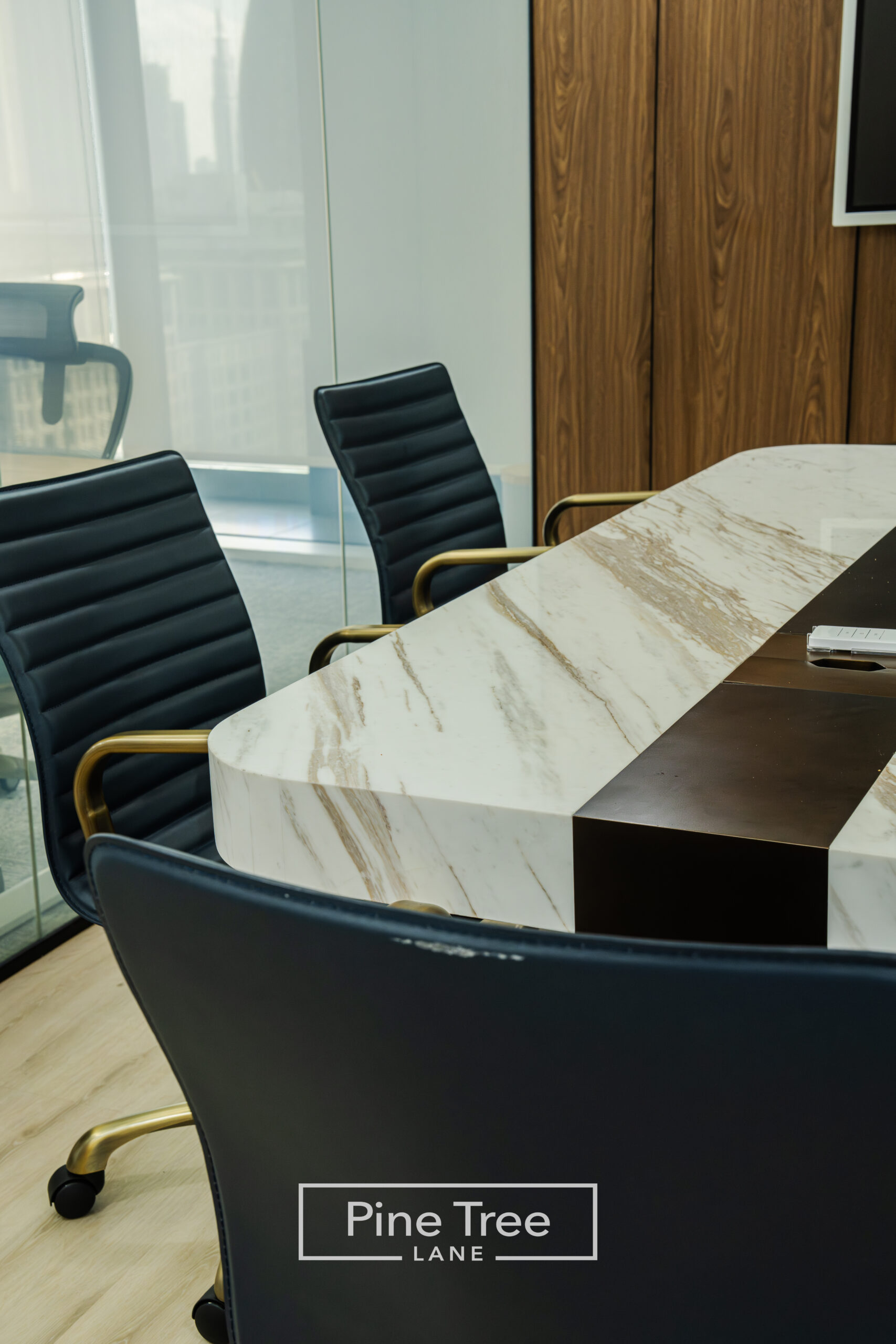
The boardroom table was made to the room rather than bought to fit it, with power modules set into the surface so cables drop through instead of running across. The metal legs were kept slim to stop a long table reading as heavy.
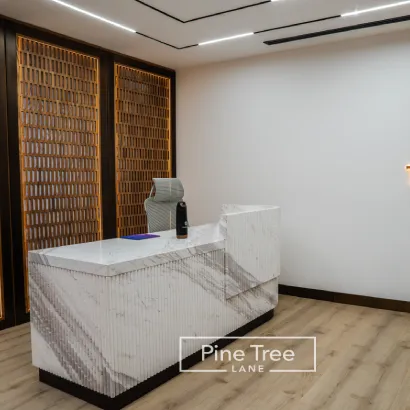
A second counter was placed where people stop rather than sit, at standing height and clear of the walkway. The slat wall behind it carries up to the ceiling, which keeps the proportion of the room upright rather than wide.
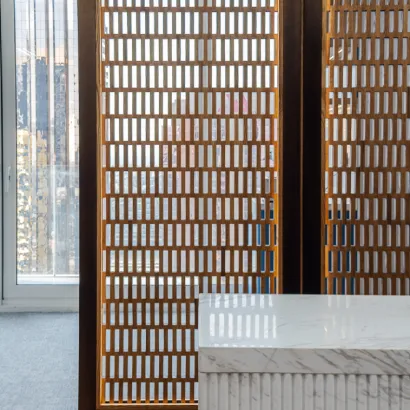
The screens run right up to the glazing, so the city stays visible from inside the meeting rooms rather than only from the open floor. The stone counter returns down the side instead of stopping at the top, which is what makes it read as solid.