Pocket doors are better when floor space is the constraint, they recover around 0.6 m² (6.5 sq ft) per doorway. Hinged doors are better for bedrooms, for sound privacy, and for any wall you cannot open up. In Dubai, the decision is usually settled by wall construction: most internal walls here are blockwork, which makes retrofitting a pocket door a building job rather than a door job.
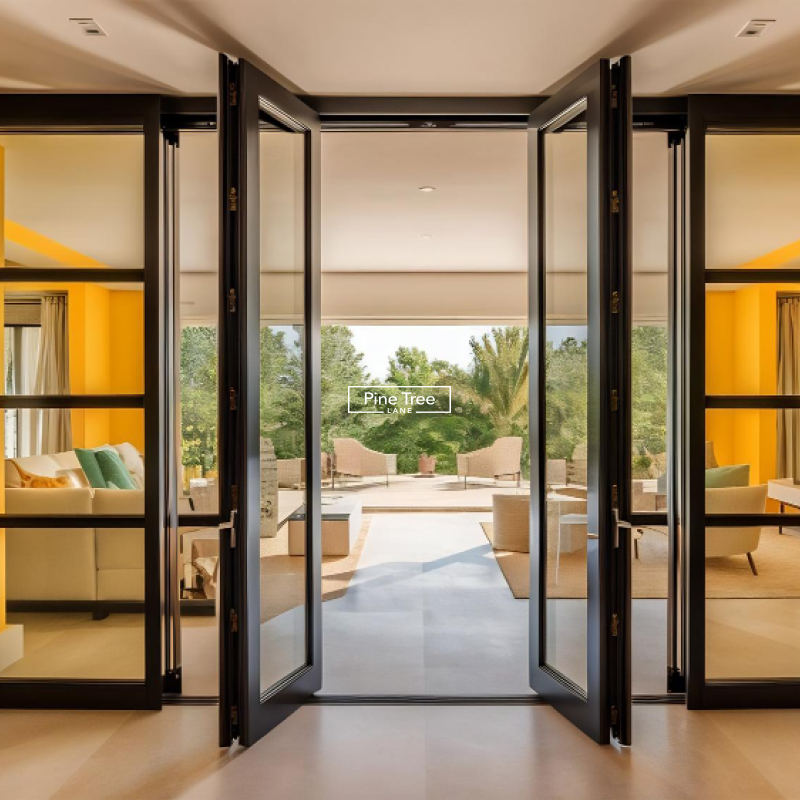
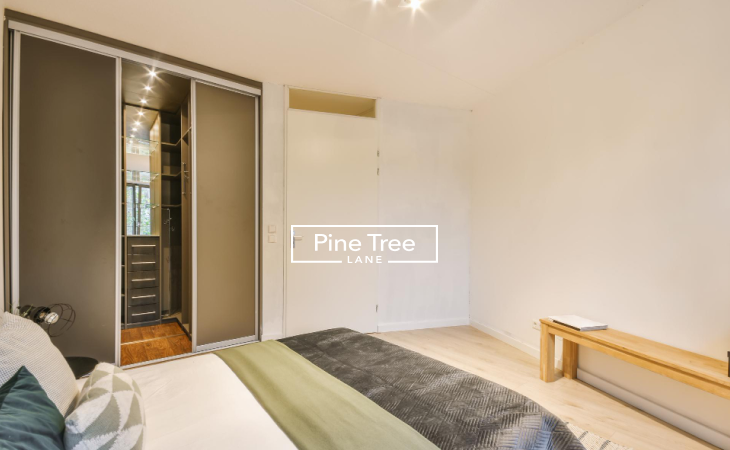
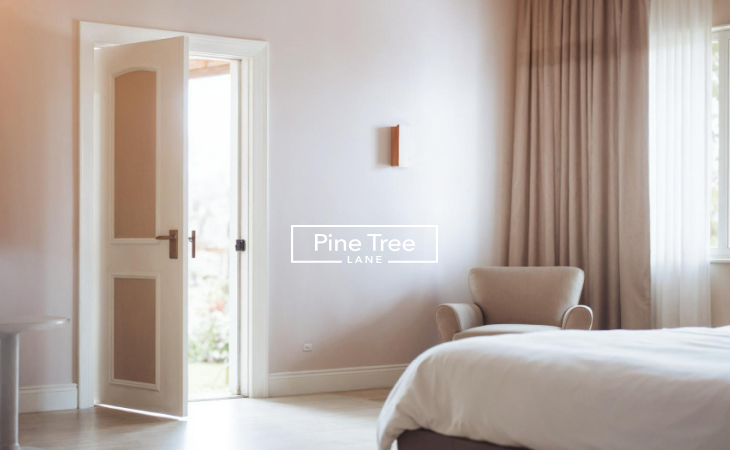
A 900 mm (35 in) hinged door sweeps roughly 0.6 m² of floor — space you cannot furnish.
A pocket door needs a clear wall run of at least twice the door width, free of sockets, switches and pipework.
Blockwork walls, common in Dubai apartments and villas, cannot take a pocket door without being opened up and rebuilt.
Hinged doors seal better. For bedrooms and bathrooms where sound matters, that usually outweighs the space saving.
The most practical approach is mixed: pocket doors in wardrobes, utility rooms and ensuites; hinged doors elsewhere.
| Feature | Pocket Doors | Hinged Doors |
|---|---|---|
| Floor space used | None | About 0.6 m² (6.5 sq ft) per door |
| Wall run required | Twice the door width, clear of services | None beyond the opening |
| Suits blockwork walls | No — wall must be rebuilt | Yes |
| Sound insulation | Moderate — gaps at head and jambs | Good with proper seals |
| Installation | Complex; structural work in a retrofit | Straightforward |
| Maintenance access | Track sits inside the wall | Hinges and handles fully accessible |
| Dust sensitivity | Higher — track collects fine dust | Minimal |
| Best rooms | Ensuites, wardrobes, utility, pantry | Bedrooms, bathrooms, main rooms |
A pocket door slides sideways into a cavity built inside the wall, disappearing completely when open. The door hangs from a track fixed at the head, running on rollers, inside a metal or timber pocket frame.
The frame is the part that dictates feasibility. A standard pocket frame needs a finished wall thickness of roughly 100–125 mm (4–5 in) to house a 35–40 mm door, and a clear horizontal run of at least twice the door width — so a 800 mm door needs around 1.7 m of uninterrupted wall.
That wall must contain no sockets, switches, water pipes or drainage, and it cannot be load-bearing without a structural solution.
A hinged door is fixed to the frame on hinges and swings open. The construction is simple, the hardware sits on the surface where you can reach it, and the door closes against a rebate on three sides, which is what gives it a proper seal.
That seal matters more than most people expect. A hinged door with a rebate and seals blocks noticeably more sound than a pocket door, which has a gap at the head and no jamb on the sliding side.
A hinged door sweeps a quarter circle with a radius equal to the door width. For a standard 900 mm (35 in) internal door, that is about 0.64 m² (6.9 sq ft). An 800 mm door sweeps about 0.50 m² (5.4 sq ft).
That area cannot hold furniture, storage or fixtures. In a 4 m² ensuite, a door swing consumes roughly 15% of the room.
A pocket door recovers all of it. But it does not create space from nothing , it borrows the wall instead. If that wall was going to hold a wardrobe, a tall unit or a mirror, the saving is smaller than it looks on the floor plan.
Wall construction is the first question. Many internal partitions in Dubai apartments and villas are blockwork or concrete rather than lightweight stud. Blockwork cannot accept a pocket frame as-is. The wall has to be broken out and rebuilt as a stud partition around the pocket, which turns a door change into a construction task with dust, waste and making good.
Newer apartments in JVC, Business Bay and Dubai Marina more often use lightweight partitions internally, which are far more workable. Older villas in Jumeirah, Umm Suqeim and the Springs are usually the hardest retrofits.
Approvals matter in apartments. Altering an internal partition in a tower typically needs building management approval and often a fit-out NOC. Confirm this before committing to a pocket door, not after.
Dust is the long-term issue. Fine airborne dust settles in the track and works into the rollers. A pocket door with a concealed track is harder to service than a surface-mounted sliding door. Specify quality rollers and ask how the track can be accessed if it ever needs attention.
If a pocket door is not feasible, a surface-mounted sliding door on an exposed track gives most of the same benefit with none of the wall work. Our sliding door design ideas cover the options.
Ensuites and small bathrooms — pocket doors, provided the wall allows. This is where the swing conflicts most directly with sanitaryware.
Walk-in wardrobes — pocket doors. The circulation space in front of the opening is exactly what you need for standing and dressing.
Utility rooms and pantries — pocket doors. Appliances and shelving usually leave no room for a swing.
Bedrooms — hinged doors, in most cases. Sound privacy and a solid close matter more here than 0.6 m² of floor.
Main bathrooms — hinged doors where the layout allows, for the same reason.
Kitchens and living areas — either. In open-plan Dubai apartments, a pocket door lets you close off a kitchen occasionally without a permanent swing zone.
The door leaf itself costs much the same either way. The difference sits in three places.
Hardware. A pocket frame, track and roller set costs considerably more than a pair of hinges and a handle.
Wall works. In a blockwork retrofit this is usually the largest single line , demolition, rebuilding as a stud partition, re-routing any services, plastering and making good.
Making good. Skirting, paint and floor finishes around the reworked wall.
In a new build or a full renovation where walls are being built anyway, the gap narrows sharply. That is why pocket doors are far more cost-effective when specified at design stage than retrofitted later.
Assuming any wall will take one. Check construction, thickness and services before the door is ordered.
Putting a pocket door on a bedroom. The sound gap is real, and most people notice it within a week.
Forgetting what the wall was for. If you lose a wardrobe run or the only place for a mirror, the space saving is a net loss.
Choosing cheap rollers. The track is buried in the wall. Hardware failure there is expensive to reach.
Ignoring the handle detail. Pocket doors need flush pulls and an edge pull to close them fully. Standard handles will not work.
Measure the swing before you decide. Mark the quarter circle on the floor with tape and live with it for a day. Many people find it does not actually obstruct anything.
Check the wall for services first. A single socket in the wrong place can end the plan. Look at both faces of the wall.
Ask for a soft-close mechanism. Pocket doors run fast and hit the jamb hard without one.
Specify a 900 mm opening where possible. Wider openings make pocket doors more worthwhile and improve accessibility.
Consider a surface-mounted slider instead. No wall work, no approval, easier servicing , and the hardware becomes part of the design.
When comparing pocket doors vs hinged doors, pocket doors win on floor space, recovering around 0.6 m² per doorway. Hinged doors win on sound, simplicity, cost and maintenance access.
For small Dubai homes, the honest answer is to use both. Pocket doors earn their place in ensuites, walk-in wardrobes, utility rooms and pantries, where the swing genuinely conflicts with fittings. Hinged doors remain the better choice for bedrooms and main bathrooms, where privacy and a solid close matter more.
Above all, check the wall before you commit. In Dubai’s blockwork construction, feasibility decides this more often than preference does.
Pine Tree Lane designs, makes and installs bespoke doors across Dubai. Our team will survey your walls and tell you honestly which openings suit a pocket door and which do not ,see our doors and windows solutions or book a free consultation.
For small rooms where the door swing conflicts with fittings, yes. A pocket door recovers around 0.6 m² of usable floor per doorway. The condition is that the adjacent wall must be able to house the pocket frame — clear of sockets, pipework and structure, with a run of at least twice the door width.
Sometimes. Lightweight stud partitions, common in newer apartments, accept a pocket frame readily. Blockwork walls, common in villas and older buildings, must be broken out and rebuilt as stud partitions first. In apartment towers, building management approval or a fit-out NOC is usually required.
The door leaf costs similar, but pocket doors add a track and frame, wall construction and making good. In a blockwork retrofit the wall works are usually the largest cost. Specified during a new build or full renovation, when walls are being built anyway, the difference narrows considerably.
No. A hinged door closes against a rebate on three sides and can take perimeter seals. A pocket door has a gap at the head and no jamb on the sliding side, so more sound passes through. For bedrooms and main bathrooms, a hinged door is the better choice.
Yes. Hinges, handles and seals sit on the surface and can be adjusted or replaced in minutes. A pocket door’s track and rollers are concealed inside the wall, so servicing is harder , which is why roller quality matters far more on a pocket door than on a hinged one.


