Choose matte kitchen cabinets if you want a soft, low-glare finish that hides fingerprints and dust. Choose gloss if your kitchen is small or short on daylight and you need the surface to bounce light. In Dubai specifically, matte and supermatt finishes are the more forgiving option, because fine airborne dust and hard water marks show clearly on high-gloss doors.
| Feature | Matte Cabinets | Gloss Cabinets |
|---|---|---|
| Light reflection | Low (under 10 gloss units) | High (above 80 gloss units) |
| Perceived brightness | Absorbs light; keeps the room calm | Bounces light; makes rooms feel larger |
| Fingerprints | Barely visible, especially on supermatt | Clearly visible on dark colours |
| Dust visibility | Low | High under downlights |
| Hard water marks | Rarely visible | Visible near sinks and taps |
| Scratch visibility | Low on mid-tones; repairable on lacquer | Higher — scratches catch the light |
| Glare from direct sun | None | Noticeable in south and west-facing kitchens |
| Best suited to | Large, bright kitchens; minimalist and warm schemes | Compact kitchens; north-facing rooms; sleek modern schemes |
| Typical materials | Matte laminate, matte PU lacquer, supermatt acrylic | High-gloss acrylic, gloss PU lacquer, gloss foil |
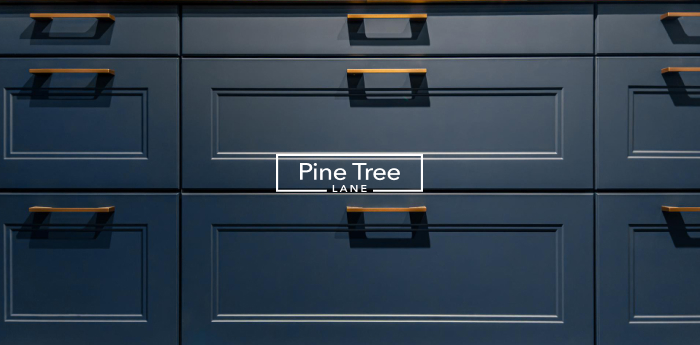
Matte kitchen cabinets have a non-reflective surface that absorbs light rather than bouncing it. The result is a flat, even colour with no visible highlight — the door reads as a solid block of tone from every angle.
The finish is measured in gloss units. Matte doors sit below 10 gloss units, which is why they show no mirror image at all. That low reflectivity is what hides fingerprints, dust and minor surface marks
Matte laminate is the most common and the most economical. Durable, wide colour range, but edges and repairs are the weak point.
Matte PU lacquer is sprayed and cured, giving a seamless finish with no visible edge banding. It can be locally repaired if damaged, which laminate cannot.
Supermatt acrylic with anti-fingerprint coating is the premium option. It has a soft, almost velvet touch and actively resists fingerprint marks — worth specifying in a family kitchen.
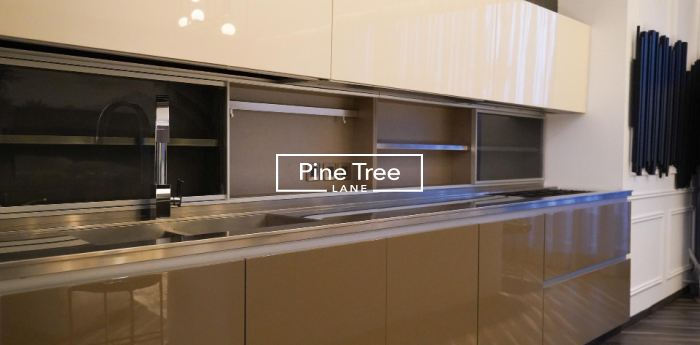
Gloss kitchen cabinets have a smooth, highly reflective surface that mirrors light and colour from around the room. High-gloss doors sit above 80 gloss units, close to a mirror.
That reflectivity is genuinely useful. In a galley kitchen or an apartment with one window, gloss wall units visually double the available light and push the walls outward.
High-gloss acrylic gives the deepest, most consistent shine and resists yellowing under strong light — the best choice for Dubai’s sun exposure.
Gloss PU lacquer is sprayed and polished, offering unlimited colour matching and a seamless edge.
Gloss foil or thermofoil is the budget option. It performs adequately away from heat, but avoid it beside ovens and hobs where the film can lift over time.
Three local conditions change this decision, and none of them appear in generic advice.
Dust. Fine airborne dust settles continuously in Dubai homes, even with windows closed. On matte doors it is invisible until you run a finger across. On gloss doors under LED downlights, a two-day layer of dust is obvious across the whole run.
Hard water. Dubai’s mains supply leaves mineral spotting. Around a sink or tall tap, those marks are visible on gloss doors within days and require wiping with every clean.
Direct sunlight. Villas in Arabian Ranches, Dubai Hills and Emirates Hills often have large kitchen glazing facing south or west. Gloss doors in those kitchens produce genuine glare during afternoon hours. Matte does not.
The reverse applies in apartments. A JVC, Business Bay or Dubai Marina kitchen is frequently internal or single-aspect, sometimes with no window at all. There, gloss wall units are the single cheapest way to make the space feel bigger.
Gloss, in most cases. Reflective doors return light into the room instead of absorbing it, and a small kitchen finished in light-coloured gloss reads as noticeably more open than the same kitchen in dark matte.
But size alone should not decide it. A compact kitchen with good daylight works equally well in light matte, and matte will be less demanding to keep looking clean. Where the room is both small and dark, gloss is the clearer answer.
For layout decisions that affect this further, see our kitchen island design ideas.
Both, but they signal different things. Gloss reads as sleek, modern and polished, particularly against stone-effect worktops and integrated appliances. Matte reads as considered and understated, which is where high-end kitchen design has moved in recent years.
The most reliable approach is combining them: matte base units in a deeper tone with gloss wall units above, so the lower half grounds the room and the upper half lifts the light. Your worktop matters as much as the doors here — compare options in our guide to the best countertop materials for kitchens in Dubai.
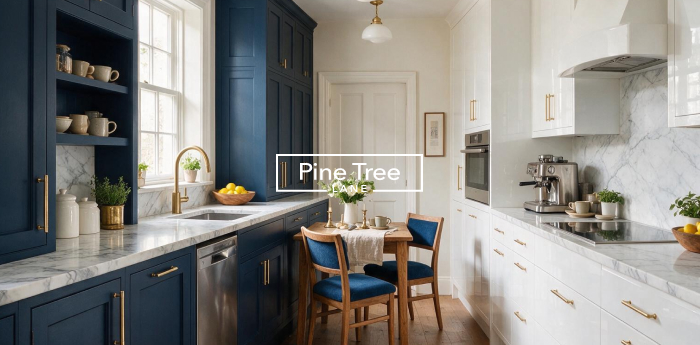
On a recent villa project in Jumeirah Park, we finished the kitchen in deep navy against a white marble worktop and light wood flooring, with brass and gold accents on the handles and pendants.
Navy is exactly where this decision gets tested. In high gloss, a dark door of that size shows every fingerprint along the drawer fronts and every watermark near the tap , and in a Dubai kitchen, a two-day layer of fine dust reads clearly across the whole run under downlights. In matte, the same colour stays flat and even, and the marble worktop does the light-reflecting work instead.
We used the same logic elsewhere in the villa: full-height white cabinetry in the living area with black handles, and shaker-style doors with integrated mirrors in the walk-in wardrobe, where the mirrors handle brightness so the doors did not need to.
Choosing gloss purely because the kitchen is small. If that small kitchen already has good light, matte will look better and need less upkeep.
Judging samples in a showroom. Showroom lighting is designed to flatter. Always view door samples in your own kitchen, at the time of day you use it most.
Ignoring the handle decision. Handleless push-to-open doors are touched directly on the face, which multiplies fingerprint contact. Gloss plus handleless is the hardest combination to keep clean.
Matching the worktop finish to the door finish. Gloss doors under a gloss worktop produce visual noise. Contrast the two.
Forgetting the edges. On laminate doors, the edge band is where failure starts. Ask what edging is used and how it is bonded before comparing prices between suppliers.
Ask for the gloss unit rating, not the marketing name. “Super matt” and “silk matt” mean different things between suppliers. Below 10 GU is genuinely matte; 10–40 GU is satin.
View samples at three light levels — daylight, warm evening light and bright white task light. A door that looks grey at noon can look beige at 8pm.
Take a fingerprint test. Press a clean thumb firmly onto the sample and look across it at an angle. This alone changes many decisions.
Specify anti-fingerprint supermatt in family kitchens. The cost uplift is modest and it removes the single most common daily complaint.
If choosing gloss, go lighter. Fingerprints, dust and water marks are dramatically less visible on white and light grey gloss than on navy, charcoal or black.
When comparing matte vs gloss kitchen cabinets, matte gives you a low-glare, forgiving finish that hides Dubai’s fine dust, fingerprints and hard water marks. Gloss gives you reflected light, which is genuinely valuable in compact apartment kitchens and rooms with limited daylight.
For most Dubai villas with good natural light, matte is the more practical long-term choice. For apartments in JVC, Business Bay or Dubai Marina, light-coloured gloss usually wins. Mixing the two remains the most flexible option.
Pine Tree Lane designs and builds bespoke kitchens across Dubai, and we will bring physical door samples to your home so you can see both finishes in your own light before committing. Book a free consultation or use our Interior Cost Estimate tool to get started.
Neither is universally better. Matte suits large, bright kitchens and hides fingerprints, dust, and water marks, making it the more forgiving choice in Dubai. Gloss suits small or dark kitchens because it reflects light and makes the room feel more open. The right answer depends on your kitchen’s size and daylight.
Gloss doors wipe clean easily, but they show more. Dubai’s fine airborne dust and hard water spotting are both clearly visible on high-gloss surfaces, particularly in dark colours and under LED downlights. Expect to wipe gloss cabinets more often than matte to keep them looking their best.
Yes. Matte finishes sit below 10 gloss units, so they produce no reflection for a fingerprint to catch. Supermatt finishes with an anti-fingerprint coating perform better still, actively resisting marks. On dark gloss doors, by contrast, fingerprints are visible almost immediately after contact.
Yes, and they are often the best option. Reflective doors bounce available light back into the room, making a compact kitchen feel brighter and more open. Light-coloured gloss works best — white and pale grey deliver the brightness benefit while showing far fewer marks than dark gloss.
Yes, and it is a common approach in modern kitchens. Matte base units with gloss wall units ground the lower half of the room while reflecting light above eye level. Keep the colour palette consistent across both finishes so the contrast reads as intentional rather than mismatched.


